EICR inspections and electrical testing
Fixed-installation inspections, landlord EICRs, electrical safety reports and remedial work.
Explore this serviceDomestic electrical
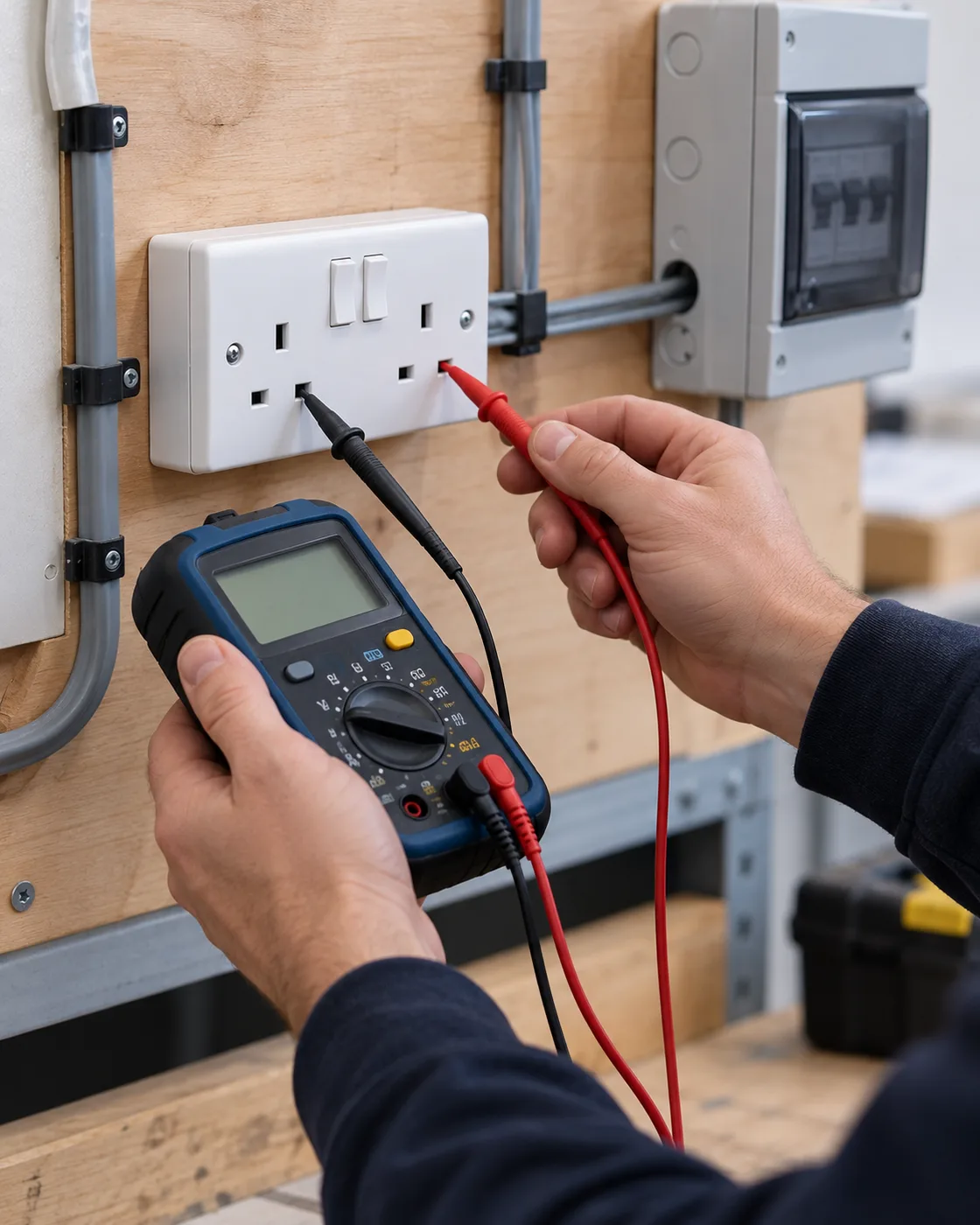
Do your circuits keep tripping, lights flicker or sockets work only some of the time? We investigate electrical faults and discuss the repairs needed, checking whether the problem is in your wiring, a fitting or connected equipment.
How we can help / 01
You don't need to know what's causing the fault before calling us. Tell us what happens, which areas lose power and whether it coincides with an appliance, wet weather or a particular time. We'll use that history to guide the investigation rather than assume a tripping breaker is the part that needs replacing.
Flickering lights, intermittent sockets and partial power failures have several possible causes. Describe what you observe without opening fittings, probing wires or repeatedly resetting protection. That gives us a useful starting point for the investigation.
How we can help / 02
Burning smells, scorching, sparks, smoke and electric shocks need serious attention. Stop using affected equipment and keep people away. Do not touch exposed wiring, wet electrical equipment or damaged parts. If there is fire or an immediate threat to life, call 999 rather than waiting for a quotation.
Only isolate a supply if this can be done safely without approaching the hazard. Never bypass protection or keep restoring power to a repeatedly tripping circuit. No guaranteed emergency attendance or response time is advertised; call to establish availability and use the appropriate emergency service when needed.
How we can help / 03
A fault that comes and goes can be frustrating. We can investigate it, and a simple record of when it happens can help: note the time, weather, equipment in use and areas affected. Please don't try to recreate a dangerous problem just to show us.
Diagnosis may require isolating circuits or disconnecting equipment. Arrange access to the consumer unit and affected rooms. Explain sensitive equipment or working-from-home requirements, and distinguish the investigation stage from the permanent repair.
How we can help / 04
Once we've investigated the problem, we'll explain what we've found and the proposed repair. The cause might be a socket, connection, cable or an appliance rather than the whole installation. We'll discuss any further access or investigation needed before agreeing follow-up work.
Ask what has been found, which repair is proposed and what tests establish completion. Inaccessible wiring or additional defects may change the scope. Agree follow-up work rather than assuming an investigation covers every possible repair. Retain any completion documentation and explanation of unresolved issues.
A photograph of the outside of a fitting or board can help you describe the problem. We still need to inspect and test the installation to check hidden wiring and establish the cause. Please don't remove covers to take a photograph.
Let us know what happened, even if the power is back on. An intermittent fault can still need investigation. Keep any notes about the circumstances, and don't try to bring the fault back to demonstrate it.
No. Fault finding investigates a particular problem you've reported; an EICR examines the condition of an agreed installation. Tell us if you also need a landlord or property report and we'll discuss the right scope.
Related electrical services
Fixed-installation inspections, landlord EICRs, electrical safety reports and remedial work.
Explore this serviceFuse box replacement, circuit protection and assessment of the existing installation.
Explore this serviceFull and partial rewiring, renovation wiring and extension installations.
Explore this service Approved Contractor
 Domestic Installer
 Portable Appliance Testing (PAT)
NICEIC certified since 1972
Find us on NICEICCall or email with your postcode and a brief description of the job.